
Replace Baby Screams With Real Smiles: How Play Therapy Can Make a Fussy Baby Happier
As new parents, sometimes we really need to put away the Pinterest-perfect parenting guides and acknowledge just how draining fussy babies can be. If you’ve spent four hours rocking back and forth in the hallway with a baby that hates your rocking, your shushing, and even your tears, it’s easy to feel like their constant fussiness is a failing grade on your motherhood test. Yet, adopting that mindset will only lead to you consistently feeling beaten and spent. Play therapy can help.
You care about this tiny human more than anything else in the world, which is why it’s so frustrating when you can’t get them to calm down. We go into parenting thinking we’ll naturally know what to do to handle this never-ending needy creature, and we feel utterly defeated when our instincts fail us.
 Have you considered that at the root of all that commotion and annoyance, the baby is just yearning for emotional reassurance? There’s a calm, bright future with a contented baby for your family. One helpful step in learning to calm your baby involves discovering how play therapy can lead to a happier, fuss-free infant.
A Baby’s Secret Language
Human beings are creatures of emotion. From the day we are born, we feel things like stress and sadness just like adults do. The only difference is that we learn as we grow to communicate those emotions through words.
Unfortunately for babies, they can’t simply tell you, “Hey, will you please stop yelling? That really ticks me off,” or “Turn off that loud TV. It’s making my head hurt.”
Instead, they cry. Having an infant cry non-stop for days on end is enough to frazzle anyone’s nerves. Baby’s nerves are just like ours. If they don’t have an outlet for that pent-up emotional energy, it just stays stuck.
Flipping The Script on Mini Tantrums
Don’t you ever think, “Surely there’s a less exhausting method than lulling a crying baby to sleep by rocking them.” You’ve probably heard that you should either ignore the crying or distract them with some razzle-dazzle toys. But those are just Band-Aids on the problem.
If you want to heal your child from the inside out, you must meet them where they are developmentally. Babies understand the world through movement and emotion.
That is where play therapy can come in to play a super important role in your child’s development and happiness. Instead of viewing playing with your baby as something you do to keep them busy, it can be used as an emotional outlet and a way to communicate with them.
Easy DIY Play Therapy Game Plans for Fussy Babies
Are you ready to go from surviving parenthood to thriving? It’s all about rethinking your playtime methods. Here are some examples of easy tips to get started, even now:
The Mirror Game Sit your baby up straight and mimic everything they do. Make the exact same faces they make while exaggerating your facial movements. Follow their coos with silly animal sounds. This kind of mirroring communicates to their brain in a way that they understand that you get them.
The Magic Movement Place your baby on a blanket on the ground and slowly drag them across the room. Babies have something called a vestibular system that gets stimulated by movement. Helping your baby learn how to manage big emotions is easy when you take them on a slow journey.
Never ignore a whimper As soon as they whimper, hum softly back instead of ignoring or shushing. You are communicating to your baby that you will be there with them when things feel hard.
The truth is, parenting is difficult, and infants don’t come with an instruction manual. If you’ve tried everything and your home still looks like a war zone, there’s no shame in asking for help.
Learning about baby play therapy can open your world to magical ways to connect with your child. Talk to some of the child therapists on this site, or simply pick up the phone and contact someone who can guide you through the first steps.
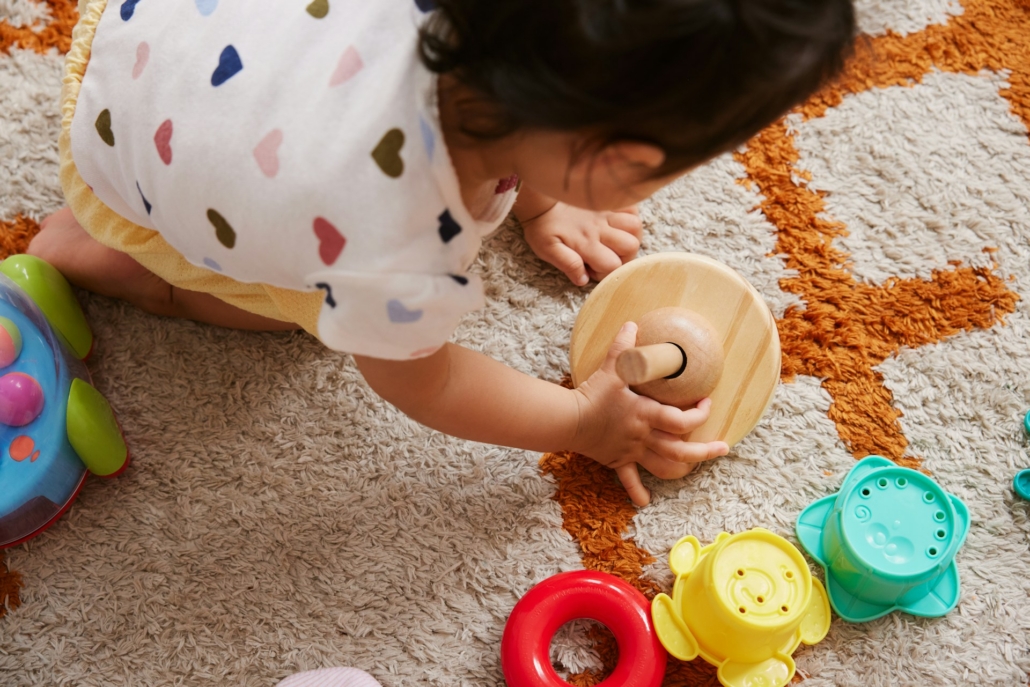
“Baby Playing”, Courtesy of Natalie Blauth, Unsplash.com, CC0 License